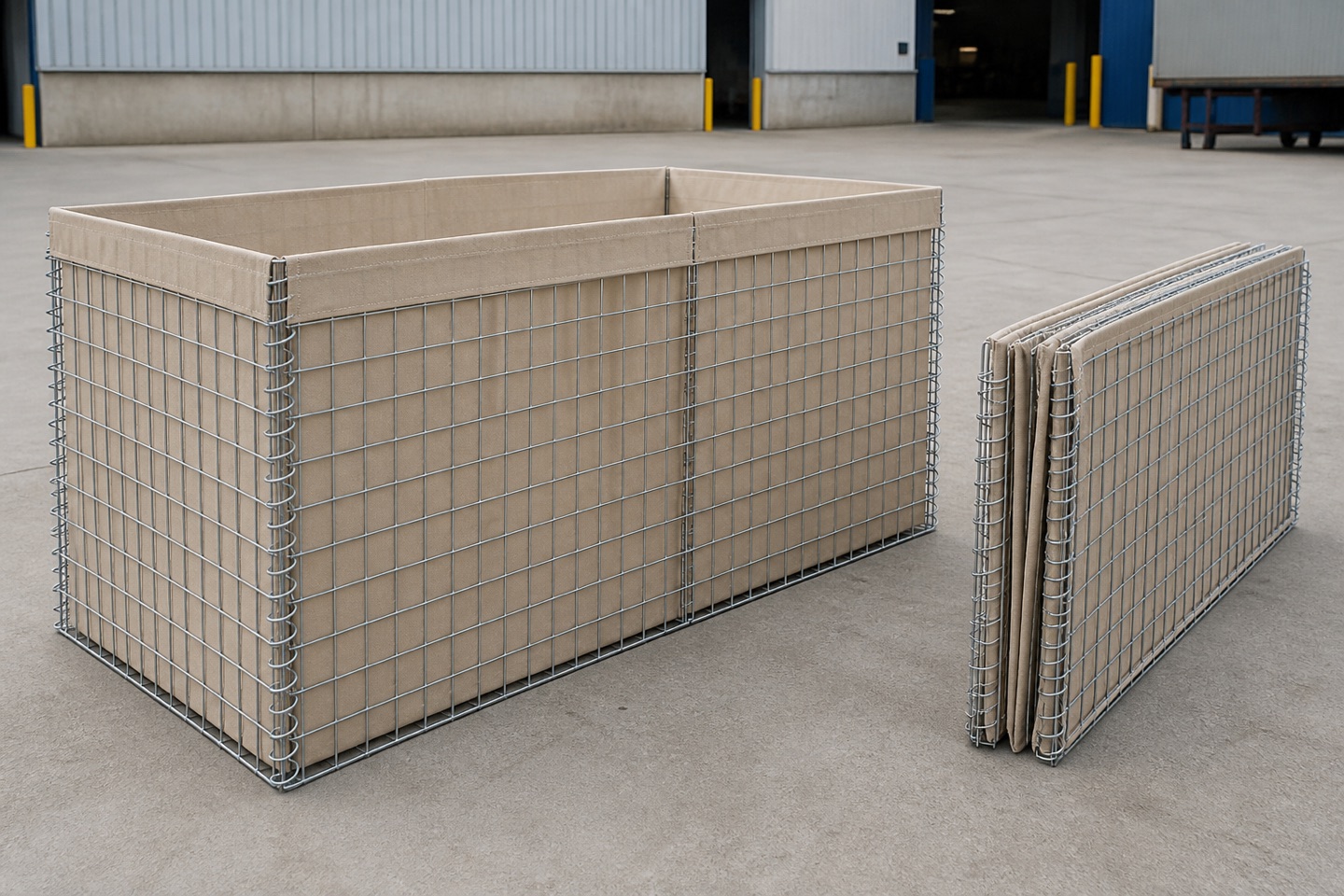
A structured RFQ reduces assumptions between the buyer, supplier and project team. It should identify confirmed requirements separately from items still awaiting engineering review.
Separate product and project inputs
List unit geometry, mesh, wire, coating, liner and connectors as product fields; record foundation, fill, loading and layout as project inputs.
Use drawing references and revision numbers
Connect every non-standard dimension to an identifiable drawing and keep the same revision reference in quotations and order documents.
Mark open decisions clearly
Do not fill missing values with typical assumptions. Assign an owner and due date for each open item before production approval.