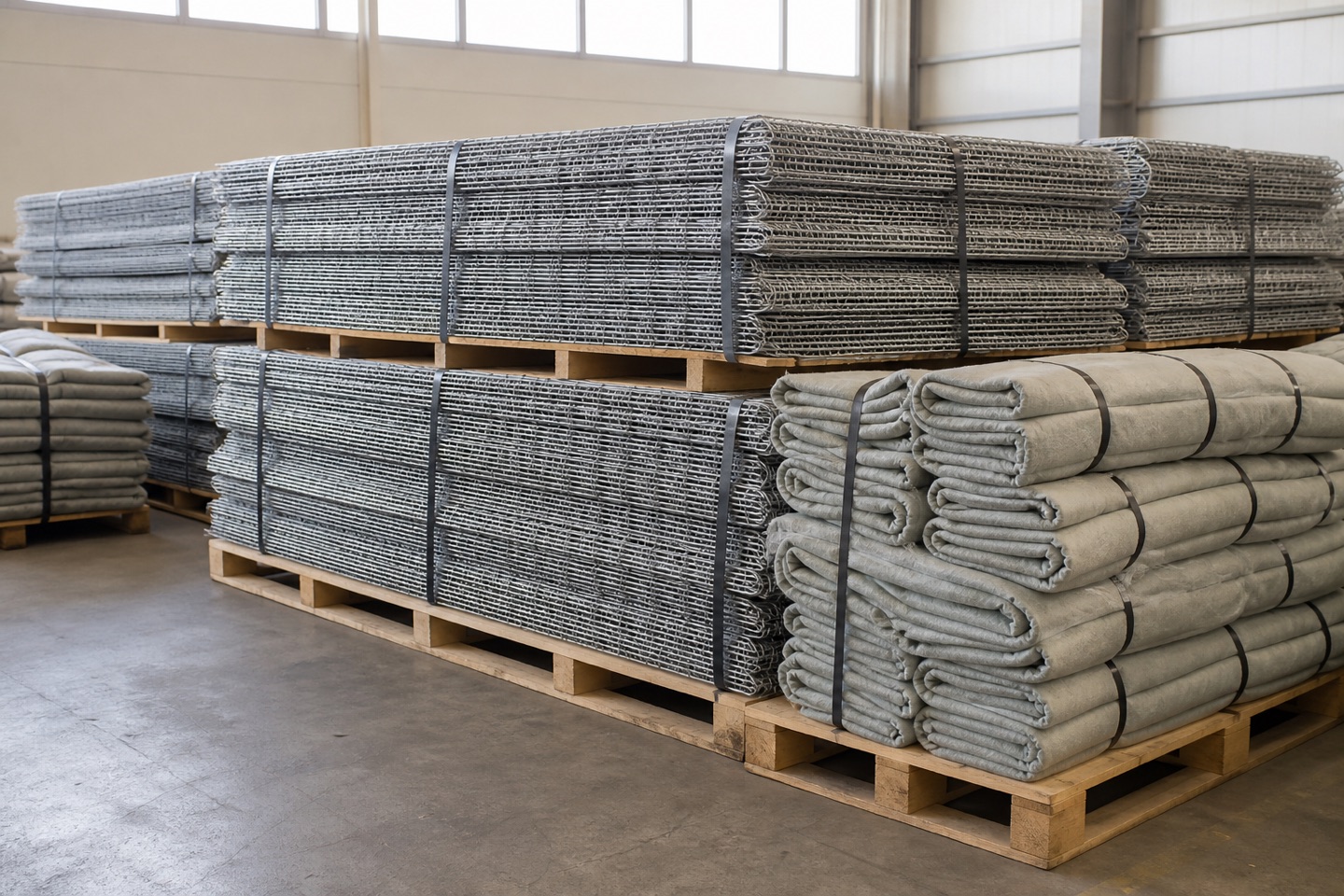
A metal product and its packaging are separate parts of shipment planning. Before packing welded mesh for Australia, ask the importer or broker to confirm the current BICON conditions for the actual goods, packaging and route. This checklist is a planning aid, not an import approval or a promise of clearance.
1. Identify every material used to carry or protect the mesh
Australia's Department of Agriculture, Fisheries and Forestry directs importers to BICON for timber and bamboo packaging conditions. Small bearers and loose dunnage need attention as well as the main pallet. Do not treat the mesh being metal as proof that the complete package is cleared.
- Create one packing-material list for each bundle or crate ID.
- Identify solid timber, processed wood, bamboo and non-wood components separately; describe any combination rather than calling it simply a wooden pallet.
- Include blocking, spacers and materials added by a forwarder after the factory pack is closed.
2. Record cleanliness before loading and dispatch
DAFF identifies soil, plant and animal material among container biosecurity risks. Review the container and cargo-handling area, not just the visible faces of the mesh. Record an issue and arrange appropriate action before closing the container; a photograph is evidence of what was observed, not a government clearance.
- Record container identification and the inspection date.
- Photograph accessible interior areas, the loading area and any finding before packing hides them.
- Keep package labels legible so the inspection record can be matched to the packing list.
3. Have the importer confirm the evidence for the chosen pack
ISPM 15 concerns wood packaging in international trade; it is not a welded-mesh product certificate. Ask the importer or broker which marking, treatment and declaration evidence is needed for this consignment. Do not add an ISPM 15 mark or describe packaging as compliant without the relevant authorized process and records.
- Send the material list, package photographs and proposed marking details for review before packing approval.
- Assign who supplies the packing declaration and any supporting packaging records.
- Keep importer confirmation with the approved packing revision, not in a separate untraceable message.
4. Recheck changes before releasing the shipment
The sources linked here were checked on 24 October 2026. Import requirements can change and depend on the actual shipment. If the goods, timber supports, transshipment arrangement or destination changes, return the file to the importer or broker for confirmation rather than relying on a previous shipment.
- Buyer handover file: product drawing revision, bundle schedule, packing-material list, photographs and importer instructions.
- Open questions: who approves the final pack, who completes each record and when any missing evidence must be resolved.