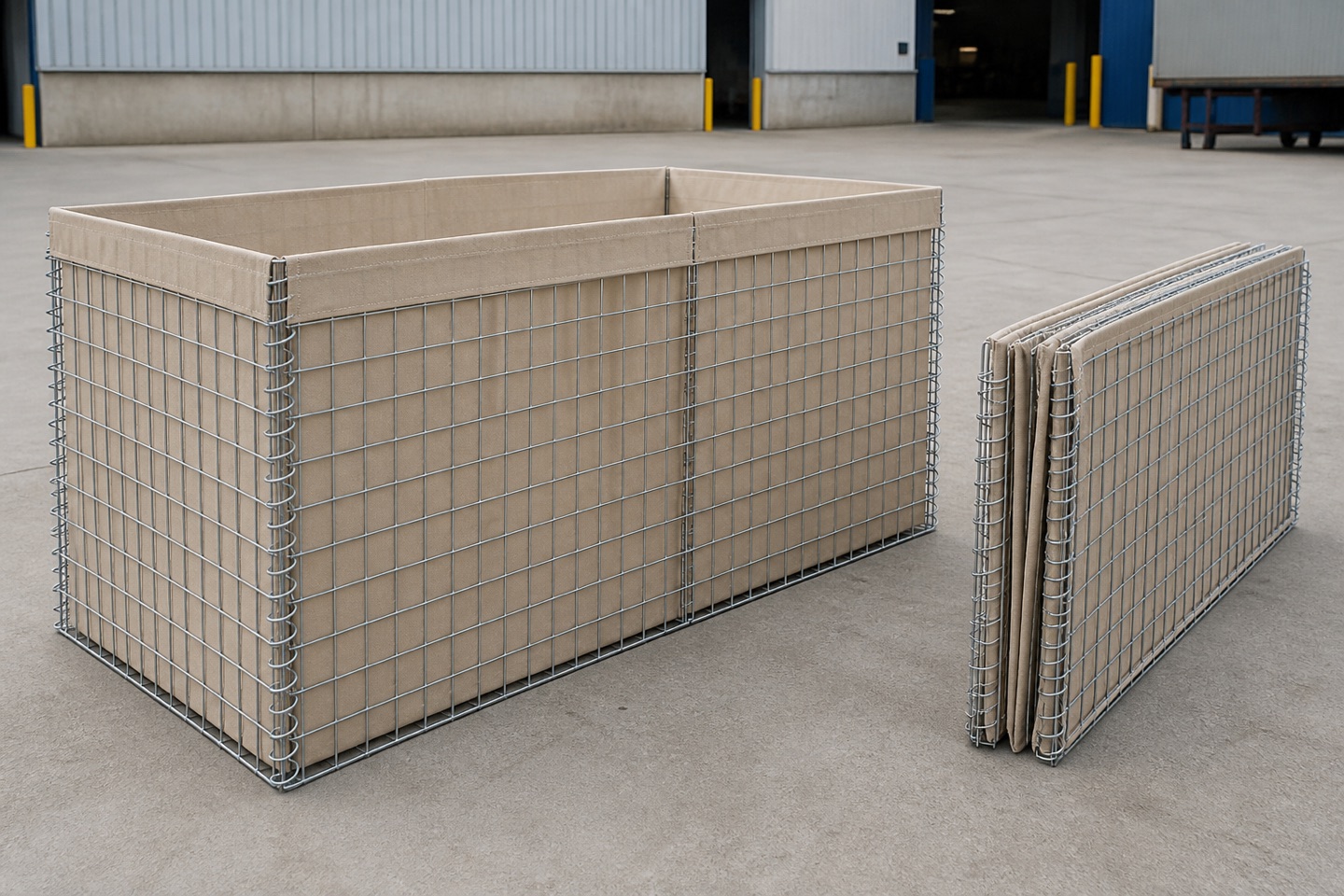
Buyers searching for a blast wall barrier, defensive bastion or sand-filled flood barrier often receive quotations for different products under similar names. Comparing the structure first avoids like-for-unlike pricing.
Defensive barrier units
A defensive barrier unit is usually a row of connected welded-mesh cells, folded flat for transport, lined with non-woven geotextile and joined with helical or pin connectors. On site it is opened, positioned and filled with sand, soil or gravel.
Welded gabion baskets
A welded gabion basket is a single box assembled from mesh panels and usually filled with stone, with no fabric liner. It is used for retaining, landscaping and architectural walls rather than as a quick-deploy lined barrier.
Fields to compare in an RFQ
State unit height, width, cell size, length and number of cells, then wire diameter, aperture, coating, liner specification and connector type. Protection performance must be defined by the project designer; a supplier quotation does not certify it.